Why Open Source?
Open Source enables faster, more collaborative solutions to energy access challenges — by sharing tools, knowledge, and designs freely.
The Energy Access Challenge
1Fragmented Knowledge and Tools
Across the energy access ecosystem, information and tools are frequently fragmented. Lessons from successful pilots may sit in reports or private repositories, making it difficult for others to learn from or replicate them. Teams in different regions often face similar problems but have no shared space or common structures that help them build on each other’s work.
2Limited Interoperability and Standards
This fragmentation is reinforced by a lack of common standards and interoperable approaches. Different systems, devices, and software stacks are designed independently and do not always communicate well with each other, which slows down deployment and drives up costs.
3High Barriers for Smaller Actors
Smaller organisations, local entrepreneurs, and community groups can find themselves locked out because proprietary tools are expensive, licensing is restrictive, or documentation is not publicly available.
4Reinventing the Wheel
At the same time, the sector frequently ‘reinvents the wheel.’ New projects may start from scratch even when similar solutions already exist elsewhere, simply because those solutions are not visible, accessible, or adaptable. This leads to duplicated effort, slower learning cycles, and missed opportunities to scale what works.
Why Open Source Matters Here
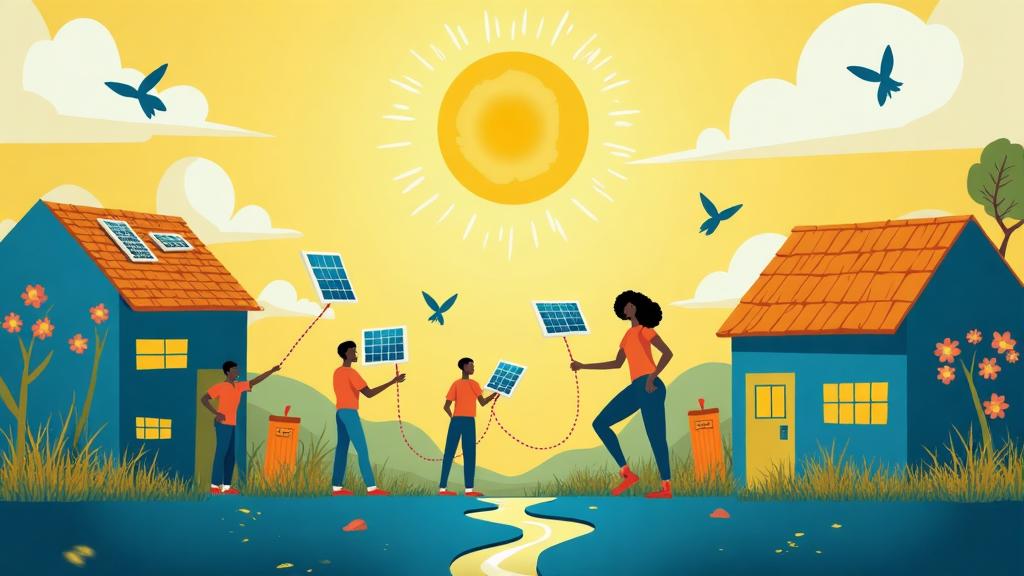
Open Source offers a practical way to respond to these challenges. By sharing designs, code, data, and documentation openly, communities can collaborate across borders, organisations, and sectors. Instead of starting from zero, people can adapt what already works and contribute improvements back to the ecosystem.
Shared Building Blocks
Open repositories of code, hardware designs, and models help teams move faster and focus on real-world adaptation rather than redoing core work.
Transparency and Trust
When tools and methods are open, practitioners can review, test, and improve them, which builds confidence among users, funders, and regulators.
Lower Barriers to Entry
Students, small companies, and community groups can access the same tools as large institutions, reducing inequality in who gets to innovate.
Better Collaboration Across Sectors
Open Source solutions are easier to integrate, re-use, and extend, enabling cross-industry work between energy, agriculture, mobility, education, and more.
How Open Source Helps Industries Prosper
Each industry benefits from increased transparency, interoperability, and faster innovation cycles as Open Source communities grow their influence worldwide.

Mini-grid and Off-grid Utilities
Open Source hardware and software solutions create affordable ways for communities and operators to expand power systems and maintain equipment.

Agriculture
Automatic and collaborative farming tools designed, coded, and improved by community contributors are helping local growers reduce labor and improve food security.

Renewable Energy
Free-to-use design platforms and data-driven planning tools accelerate the deployment and management of decentralised energy systems.

Education & Data Science
Open repositories with high-quality datasets and educational materials equip researchers, students, and policymakers with resources they can trust and build on.

Smart Mobility
Open protocols and standardised software frameworks enable scalable integrations in electric mobility and charging infrastructure.
Share Your Open Source Story
OSEA believes that every community effort, tool release, and learning experience is part of a bigger story about progress and positive impact. Have you experienced or led an Open Source project in energy, agriculture, mobility, or education? Share your journey with us!
Send your story to Thulisile Sibanda at: