Building a Community of Open Source Champions
July 17, 2026
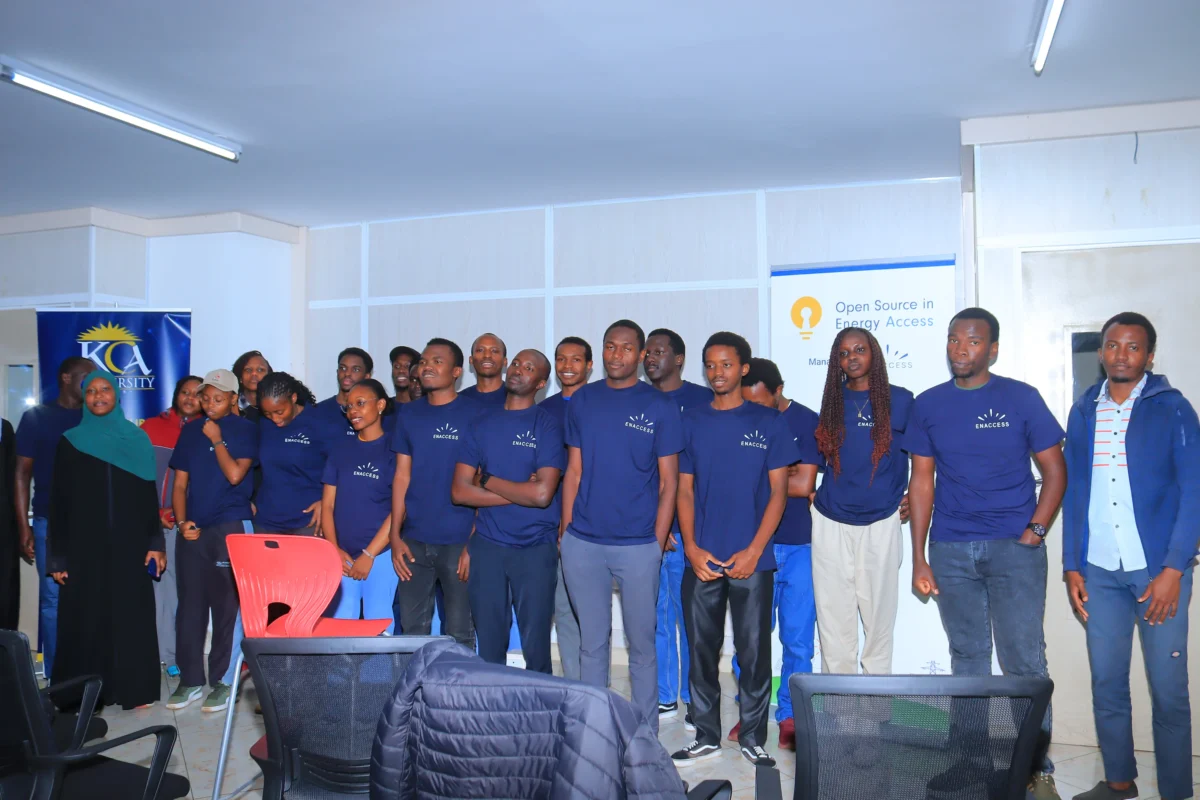
On 18 September 2026, the Open Source in Energy Access (OSEA) community gathered at KCA University Town Campus in Nairobi for a hands-on meetup focused on Open Source engineering, collaborative tools, and technology for energy access.
OSEA Ambassadors Aloys Aboge Jr. and Charles Moruri organised the meetup. It was the first in a series of regional events designed to connect developers, researchers, students, and energy practitioners with Open Source energy tools and projects.
The OSEA Ambassador Programme, managed by EnAccess, creates local spaces for people to learn, share knowledge, and contribute to Open Source projects. These local communities can also help ensure that Open Source technologies are tested and adapted to the needs of the people and organisations using them.
A full room and active discussions
The meetup reached its capacity with 45 attendees, including software developers, researchers, students, and energy access practitioners.
The open discussions sparked conversations about systems modelling, data ownership, and project onboarding. Participants also shared their experiences of working with Open Source projects and discussed some of the challenges new contributors face when getting started.
Networking breaks gave participants time to connect and continue these conversations. Attendees also received OSEA community swag and refreshments.
Post-event feedback collected through Luma surveys and video testimonials showed strong interest in future practical sessions. Many participants expressed interest in hands-on contribution hackathons.
Learning how to contribute to Open Source
The meetup included three technical sessions. Each session explored a different part of the Open Source contribution journey.
Navigating the Open Source contribution mindset
Speaker: Kevin Nibeza Barack
Kevin introduced participants to Open Source communities, contribution workflows, and community governance.
The session also covered how new contributors can identify projects that match their interests and experience.
A key point was that contributing to Open Source involves more than writing code. Contributors also need to understand how a project works, communicate with its community, follow project guidelines, and document their work. For first-time contributors, starting with clear issues and engaging with the project community can make the process easier.
The anatomy of a good Pull Request
Speaker: Ouma
Ouma focused on Pull Requests (PRs) and how contributors can make their changes easier for maintainers to review.
The session covered several practical practices:
- Write clear and descriptive commit messages.
- Explain the purpose and scope of a PR.
- Link the PR to the relevant issue.
- Keep changes focused so maintainers can review them more easily.
- Include relevant tests and documentation updates.
- Add screenshots or other visual information when they help explain a change.
These practices help contributors communicate their work clearly and give maintainers the information they need to review and maintain the project.
Applying Open Source to energy access: Your code runs in a village: MicroPowerManager
Speaker: Aloys Aboge Jr.
The final session connected Open Source contribution practices with a practical energy access use case.
Aloys introduced MicroPowerManager (MPM), an Open Source toolchain for monitoring, modelling, and managing mini-grids and distributed energy resources. The session explored the role of software in operating off-grid energy systems.
Mini-grid operators may use spreadsheets and other manual tools to manage their operations. These tools can become difficult to manage as the number of customers and system complexity increase.
Proprietary utility software can offer more functionality, but licensing and other costs may create additional challenges for smaller operators.
Open Source tools offer another approach. Operators can run the software themselves, adapt it to their needs, and maintain greater control over their data and systems.
For energy access organisations, this can make Open Source software an important part of building and maintaining locally relevant technology.
Building practical opportunities to contribute
The Nairobi meetup showed strong interest in practical Open Source learning within the local technology and energy community.
The discussions also highlighted the value of creating opportunities for people to move from learning about Open Source to contributing to active projects.
Based on the feedback from the meetup, EnAccess and the OSEA Ambassadors are planning future hands-on contribution hackathons. These sessions will give participants opportunities to work with Open Source energy projects, ask questions, collaborate with other contributors, and make contributions.
The regional meetup programme will continue to create spaces for people to connect with Open Source energy projects and build practical skills that they can apply in their own communities.
Thank you to the Nairobi community
Thank you to our speakers, Kevin Nibeza Barack, Ouma, and Aloys Aboge Jr., for sharing their knowledge and experience.
Thank you also to Aloys Aboge Jr. and Charles Moruri for organising the meetup and to KCA University Town Campus for hosting the community.
Most importantly, thank you to the participants who joined the meetup, contributed to the discussions, and shared their experiences.
The OSEA regional meetup programme is creating more opportunities for people to learn about Open Source energy technology, connect with others in the sector, and contribute to projects that support energy access.
We look forward to continuing these conversations through future meetups and contribution hackathons.